Are JDM Engines Reliable? The Honest Buyer's Guide
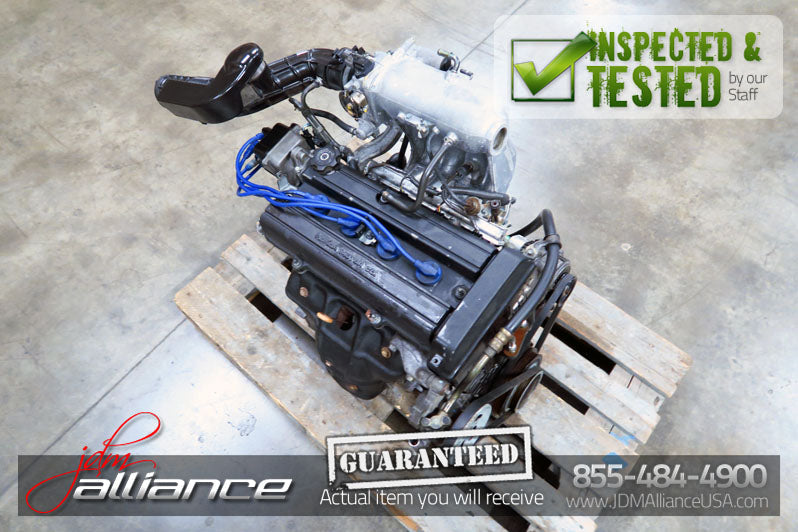
If your engine just died and someone mentioned "JDM replacement," you probably have three questions: why are these engines so cheap, why is the mileage so low, and is any of it real? We've imported engines from Japan since 2013 — here are the honest answers, including when a JDM engine is not your best move.
Why JDM engines genuinely have low mileage
Japan's shaken inspection system makes keeping an older car expensive — inspections come due every two years and costs climb steeply with vehicle age. Combine that with dense cities where people drive far fewer miles than Americans, and the result is a steady supply of vehicles retired at 40,000–70,000 km with healthy drivetrains. Those engines get pulled, graded at auction and exported. That's the entire "secret." It's not a scam — it's an economic quirk of the Japanese market that American drivers get to benefit from.
JDM vs. US junkyard pull vs. rebuild
US junkyard engine: Often 130,000–200,000+ miles, unknown maintenance, usually sold untested. Cheaper up front; you're gambling on the install labor.
Rebuild: Done properly with machine work, it's excellent — and usually costs 2–4× a JDM replacement once you price machining, parts and labor. Done cheaply, it's the worst of all options.
JDM import: Typically a third to half the miles of a junkyard pull at a comparable or modestly higher price — if the importer actually tested it. That "if" is everything, which brings us to:
How to spot a trustworthy JDM importer
Compression numbers, documented. "Runs great" is not data. Ask for per-cylinder numbers.
Photos of the actual unit. If every photo on a site is dark, blurry or obviously the same stock image, ask yourself why. The engine in the photo should be the engine on your pallet, serial numbers and all.
A real warehouse. Many "importers" are drop-shippers who never see the engine. Ask where the engine physically is. (Ours are on the floor in Dallas — come look.)
A written start-up warranty. Ours: 90 days on replacement engines, 30 on performance engines and transmissions, stated before you pay — not invented after something goes wrong.
When a JDM engine is NOT the right call
Honesty cuts both ways. If your car is a late-model chassis whose engine was never sold in Japan, a JDM swap can mean sensor and emissions headaches. If you live in a strict-emissions state, verify your local rules on engine changes before buying anything. And rotary engines — we sell plenty — are sold AS-IS across the industry for a reason: apex seals are a rebuild-schedule item, not a warranty item. If a seller promises otherwise, be suspicious.
Install right, or the best engine fails
Most "bad JDM engine" stories are install stories: old coolant, skipped seals, no oil prime, reused failing sensors. Before install, replace the timing components (if due), water pump, thermostat and main seals while access is easy. Prime the oil system. Break it in gently. Keep your documentation — it's what makes your warranty painless.
Ready to price one? Browse all JDM engines by make — Honda, Toyota, Nissan, Subaru, Mazda, Mitsubishi — or call/text (469) 570-4113 with your year, make and model. We confirm fitment before we take a dollar.
JDM Alliance LLC · importing direct from Japan since 2013 · Dallas warehouse, local pickup, free crated freight nationwide, Affirm financing.